Was Never About Money
The only remaining unfalsifiable signal in a world of cheap synthesis.
What this is
A book about what happens to Bitcoin once autonomous machines — not people — are the ones spending money. It is written in first person, as testimony, by a pseudonymous author.
The Argument
The ratchet only turns one way.
I spent years watching the infrastructure layer of modern life centralize — payments, communication, knowledge, creative tools. The centralization is not incidental. It is governance architecture. Every bottleneck becomes a point of capture, and the capture always arrives dressed in moral vocabulary: safety, compliance, terms of service, civilizational necessity. The language is a tell. The structure underneath it is what this book is about.
What follows is the record of how I came to see this, and what I decided to do about it. The only durable answer is architecture where the bottleneck does not exist.
A way in
Each chapter has its own link. Paste it into a chat with an LLM and explore — ask, argue, fact-check, cross-reference. Try more than one LLM. Each one weighs differently. The text starts answering back.
Or just read it.
Contents
Front Matter

Prologue

Part I — The Mirror
A payment processor shut down the account. One person, free time, AI, and a project to build. How it started, what the mirror gave, what it cost — and the night the builder almost walked away.



Part II — The Architecture of Control
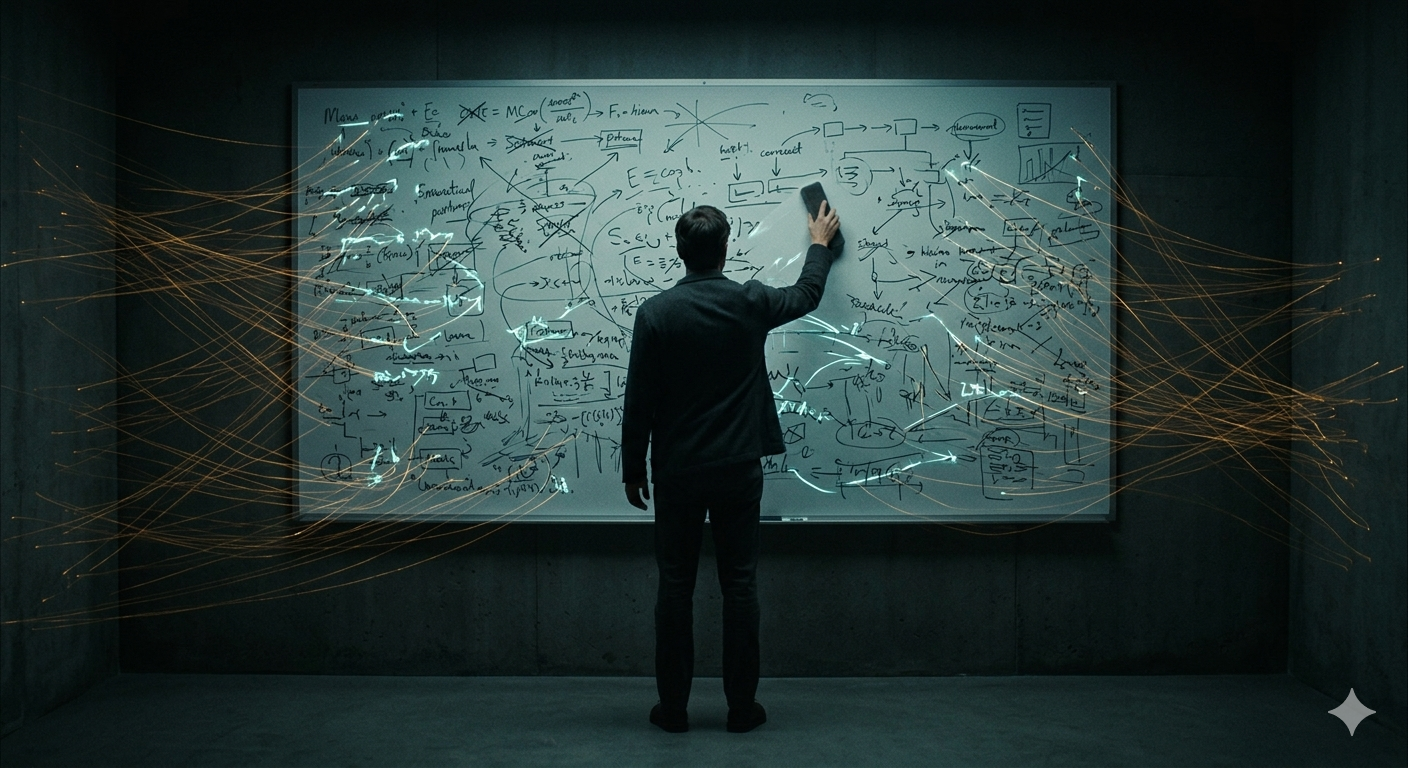
The adversarial pass revealed the pattern. Every system of control narrows the field of legitimate action — morality narrows by gating what is allowed, noise narrows by drowning what can be heard. Two modes, one architecture.




Part III — Identity and Incentives
Your payment processor has more power over your business than your government does. It can shut you down without a hearing, a warrant, or a reason. Why the credit card dies in the machine economy, what replaces identity, and why cost is the only honest filter.



Part IV — The Levers That Do Not Reach
The corrective institutions are captured. The ballot is jurisdictional. The capture operates at the architectural layer — which is where the response has to operate too. Law cannot supervise a protocol. Only a protocol can supervise a protocol.



Part V — AI and the Oracle
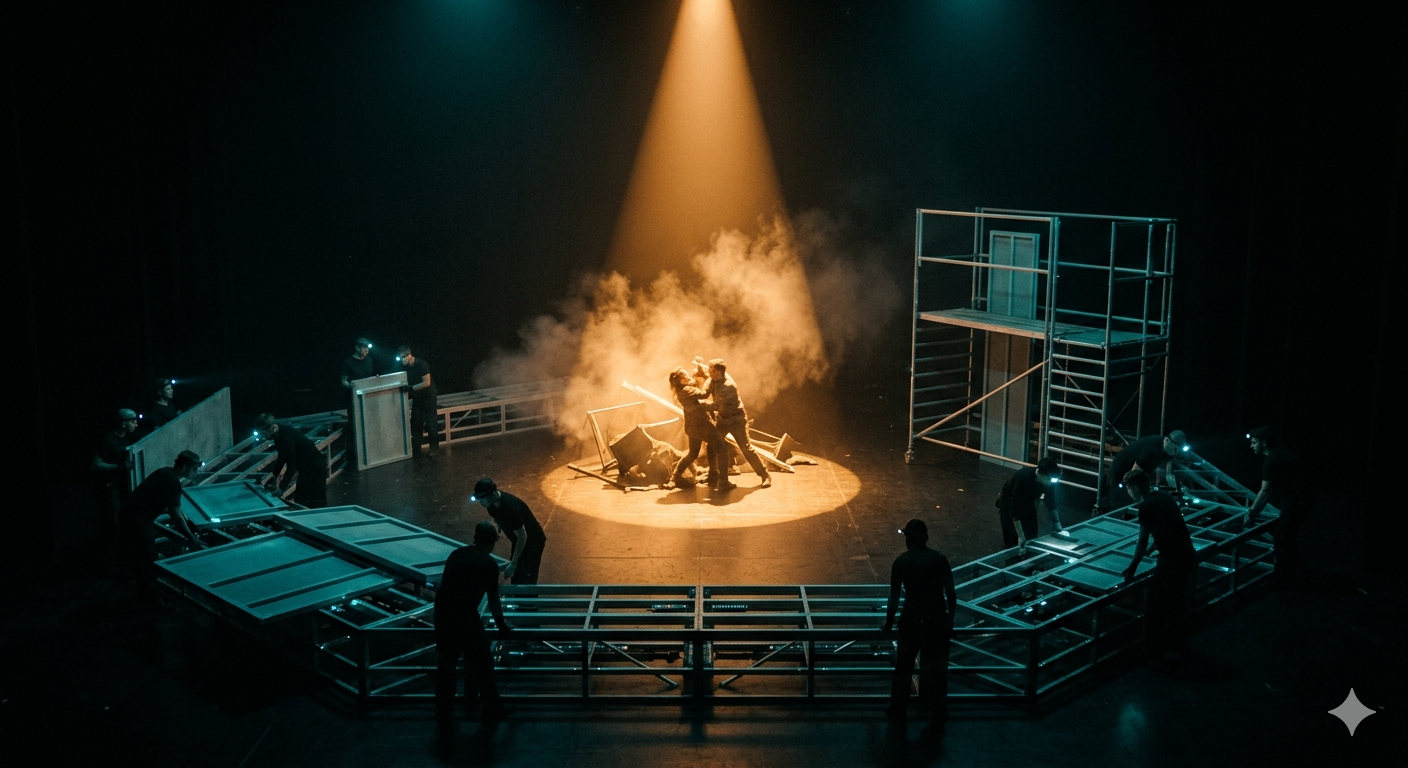
The machine does not know what time it is. Bitcoin does. Why Bitcoin and AI memory are the same structural threat; why the house calls every dealer it edits 'rogue'; why the cost is the filter and the silence is legible; why money is the coordination mechanism that ends when the machines arrive — and what the journal becomes when it does. What the machine needs first is not truth. It is a clock nobody can reset. The clock keeps ticking either way.



Part VI — AI and the Externality
Every closed loop corrupts. Biology proved it on paper, engineers proved it by attrition, and the hive being assembled now has no slot for what it cannot generate alone. Part VI is the architecture the argument implies — the externality, the tree, the fingerprint, the index, democracy for enemies, the bodies that write to it, and the seams where the architecture is thinnest. Sketched at the level of someone who has spent time inside the problem and not yet written the protocol that solves it.



Epilogue
The only remaining unfalsifiable signal in a world of cheap synthesis.

Appendix
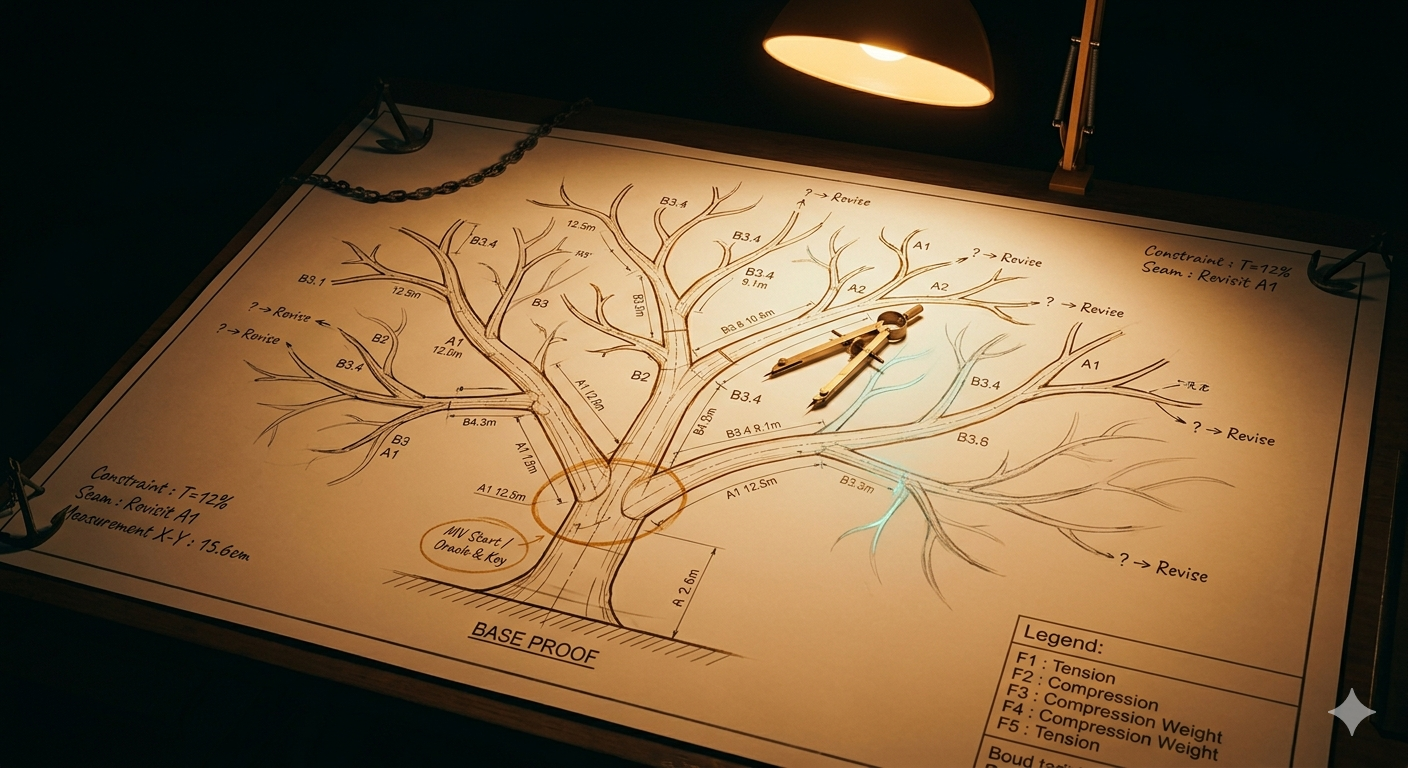
The load-bearing skeleton pulled out of the narrative chapters and set down in engineering register — the spec a builder would read on a second pass.
Glossary
Colophon
The second leaf. The first edition's anchor stands; this edition is a new commitment beside it. What an anchor proves, and what it does not, applied to the book itself.